Think you've got what it takes to be a Stevie Explorer?
Explore the Field Journals. Try the challenges. Look closely, ask questions and see what you discover.
When you're ready, your Explorer Badge is waiting.
Stevie’s Field Journals
No. 01
Meerkat
Meerkats can eat poisonous scorpions without anything happening to them
I should not complain about my old school bike, Dad said, and asked if I would like a donkey instead when I kept complaining. Yeah, right, Dad. My old bike makes terrible squeaking and clonk-clonk noises when I go around corners. So, now I go to school early before the cool guys like Berni-shiny-hair and Andy-stiff-upper-lip come zipping along on their fancy new bikes. I'm sure they do a million miles per hour, and I do about five or six.
Maybe I should not complain because Pete, you know, the guy who sits in the back of the class, and his friend, Jo-Jo, walk to school. But imagine plodding along on a donkey! Or imagine riding a meerkat, who does 20 miles per hour, which is waaaay faster than the cool guys!
Meerkats are very small and weigh as much as two bricks of butter
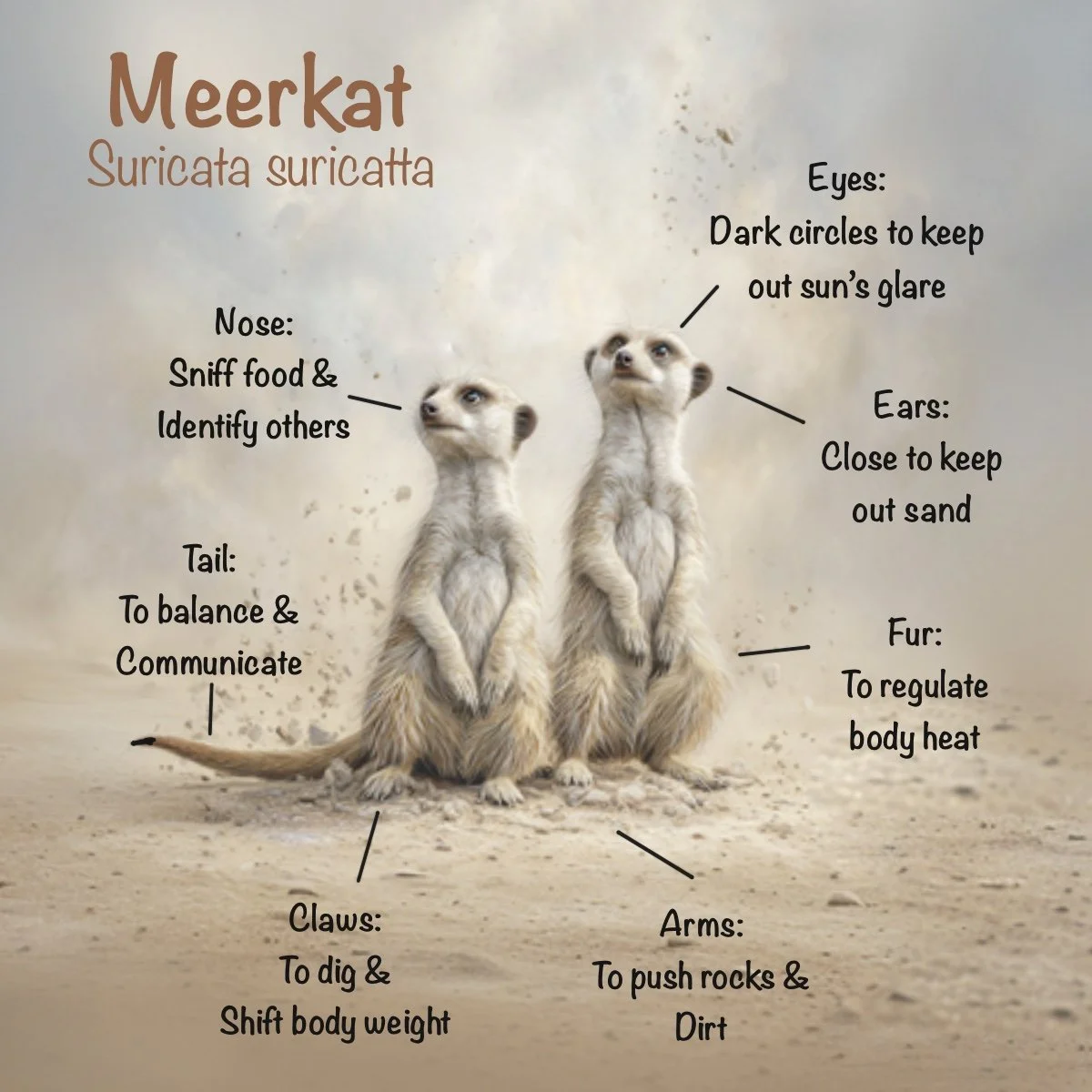
Long, long ago, I mean as long ago as 1776, a guy called Johann Christian Daniel von Schreber first described meerkats but did not name them.
The word meerkat probably comes from Afrikaans, the language Gran grew up with, which has not even been in use for 150 years.
In Afrikaans, the words 'mier' (ant) and 'kat' (cat) were joined to describe the meerkat's diet of ants and because they look somewhat like cats.
Remember, meerkats are not cats at all but related to mongooses.
Gran and I talked about meerkats the other day, and she said running fast is not their best quality. What?! Come on, Gran!
'Oh, Stevie, if only we humans could live like meerkats, the world would be so much better,' she said, and then followed it with, 'They drink no water, don't kill cows, chickens or pigs for food, and they don't become fat or need special warm clothes out there in the desert. No, they are happy to live underground in a hole and work very hard to keep it clean. They work even harder when out hunting for food, because they eat insects, lizards and sometimes little birds, which are not that plentiful in the desert. Unlike humans, snakebites do not affect meerkats. But best of all, they love their family and will go to war to protect them. I think I would like to be a meerkat.'
Good grief, so do I!
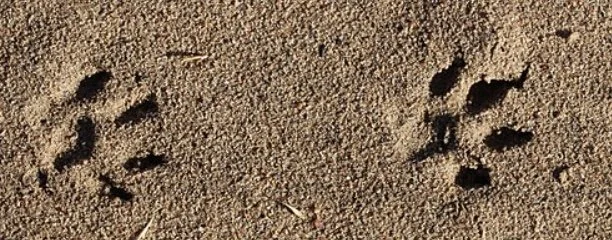
I tried to draw a meerkat, but messed all over the page. Now, you try to draw a cat that's not a cat - it’s not that easy!
When you’re finished, see if you can work out what this means:
Animal Proverb: A cat in its castle has a lion's teeth
‘The eye never forgets what the heart has seen.’

No. 02
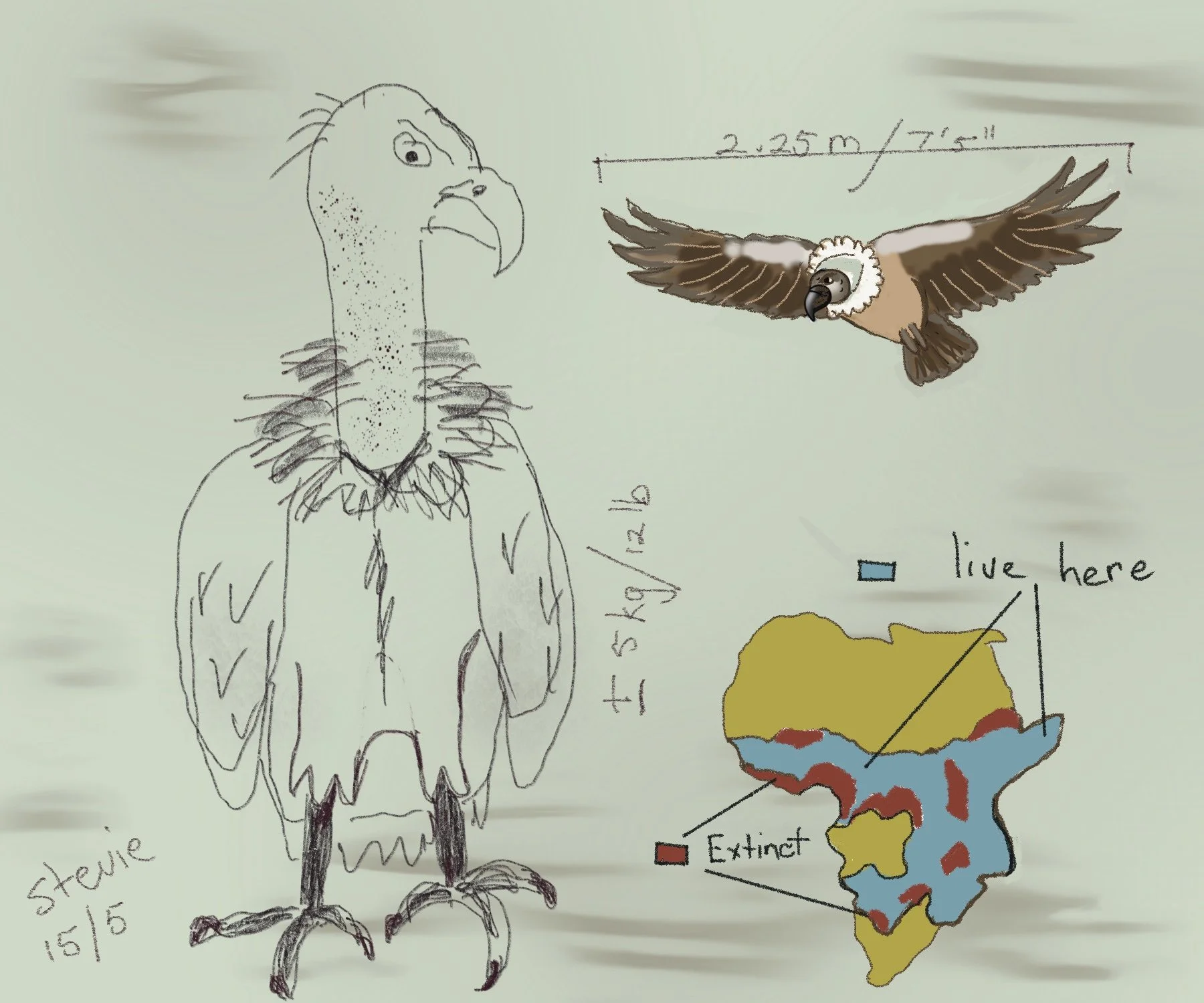
White-backed Vulture
African vultures are by far the ugliest birds, but they are the ones who help humans most
Last time I travelled to Africa, there were these tiny specs high up in the air. First, I thought my eyes were playing up, but then I noticed the specs circling almost like my gran's old washing machine, where the water goes whoosh one way, then turns to go the other.
It was a hot day; well, most days are cooking hot in Africa, but I thought it was just the heat befuddling my head and I was seeing spots where there really were none. But huh-huh, there they were doing their circling dance. I could not even begin to guess who the 'they' were but worked it out like this: whatever was in the air could only be there if it was blown there, or sucked up like by an angry hurricane, or flew there. My money was on the flying thing.
But who could fly so high? A drone? Maybe. Mrs Gooseberry told us the other day that drones can fly as high as 33,000 feet. That's 10 kilometres for you guys who don't know about feet, yards, inches and stuff. Gosh, I think not! Not out there in Africa where almost nobody lives. Besides, who would be so clever out there to do the steering, huh? Then I remembered Mrs Gooseberry said it's not steering but navigating. Oh, ok.
And hurricanes in Africa? Nuh. So, it must be a bird of some kind. And while I was watching, those 'birds' circled down and landed not far from me. I ran like the wind, and there, around a dead buffalo, were a gazillion very ugly birds with hooked beaks and long fingernails, I mean, talons. You should've seen it! They were ripping the buffalo's body like crazy! And talk about fighting over stinky meat. Oh yes, I smelled it; it was stinky all right!
Next time I am in the library, I will find a book about these birds and learn about them. Yes, that's what I'll do.
Vultures eat rotten meat and clean up after they've had a meal
Nature's vacuum cleaners. There's this guy called Eyal Frank, who spent a long time watching vultures, and then said that without them, nature would die. Apparently, because vultures are the vacuum cleaners in the veld. When animals die, vultures circle down and eat all the flesh, leaving just the bones. Unfortunately, farmers unintentionally poisoned the birds by using the poisonous painkiller diclofenac on their cattle. Frank and his fellow scientists found that when vultures in India died out, many more humans started dying as well.
The reason for that is that when vultures disappeared and were no longer scavenging dead livestock, people started dumping carrion (that's the bad meat) in rivers, leading to deadly water pollution. Other animal scavengers, such as feral dogs and rats ate some of the carrion too. They transmitted diseases to humans who started dying. In Africa, bad people poison elephants and rhinos to get their ivory tusks. When vultures eat these animals, they also die of food poisoning.
Yesterday, when I went to Gran's house for a ball play, she was sweeping the steps at her front door like crazy. I mean, dust was flying, and leaves that blew in from the street were quickly swept back where they came from. I watched her for a while, but my patient gran was not so patient out there. When I asked what was going on, she had a big frown between the eyes like Mrs Gooseberry when she's angry.
Gosh, Gran is not the angry type, so I sat down, ball and all, waiting, waiting. When she was done swishing and swooshing, she put down the broom and said, 'Let's go inside and have some snickerdoodles, Stevie. I have swept first at my own door, so I hope my neighbour will know to do the same; otherwise, I have to do hers too.'
Now, that didn't make sense at all, so I asked Gran about this sweeping thing, and when the frown was gone and the snickerdoodles in our hands, she explained: 'There's a saying that you should sweep first at your own door, before sweeping the doorsteps of your neighbours.'
Ugh, come on, Gran, I still had no idea what that meant, but she said it's sweeping without really sweeping. I should think about it, and the answer would come to me.
Ask your librarian for a book of idioms or look it up on the Internet. Search for what it means to sweep at your own door first before sweeping your neighbours'.
When you’re finished, see if you can work this out:
Animal Proverb: A bird doesn't alert its fellow bird that a stone is coming

No. 03
Hippopotamus is a Greek word which means 'river horse'
One afternoon when I was visiting Gran, I told her about eating my sandwich by myself at school. That's the day Long-haired Pete looked at my sandwich with hungry eyes and asked if I knew how to make a hippo sandwich. She laughed a happy laugh, but her eyes spoke something different. 'Why do you eat by yourself, Stevie?' she asked, and I had no answer.
Then I remembered reading up about hippos after Pete's silly business about hippo sandwiches, and I had my answer: It's not only me who likes to eat by myself; hippos eat by themselves too, and they don't care if other hippos join them. I told Gran, and she said, 'Oh, maybe it's because they eat at night and can't see who else eats with them. I thought, Uh-huh, Gran, the book said they can see very well; they just don't mind.
I also thought this was my chance to teach Gran something instead of her teaching me. So, I puffed out my chest and told her, 'Did you know, hippos eat around 35 kg of grass in a single night…every night! And, they can open their mouths at almost 180 degrees - that's GINORMOUSLY BIG!' She just smiled and said it's no wonder they can eat my body weight every night.
I was on a roll and told her these lots-of-grass-eating-giants can run faster than me too. And they weigh as much as a car, but they can't outrun cars. I was proud of myself for knowing that. She just patted my leg and said, 'Goodness, knowing all that from reading one book! Imagine how clever people would be if they read lots of books.'
Yeah, imagine that.
Hippos can't swim and just gallop underwater. Talk about being a river horse!
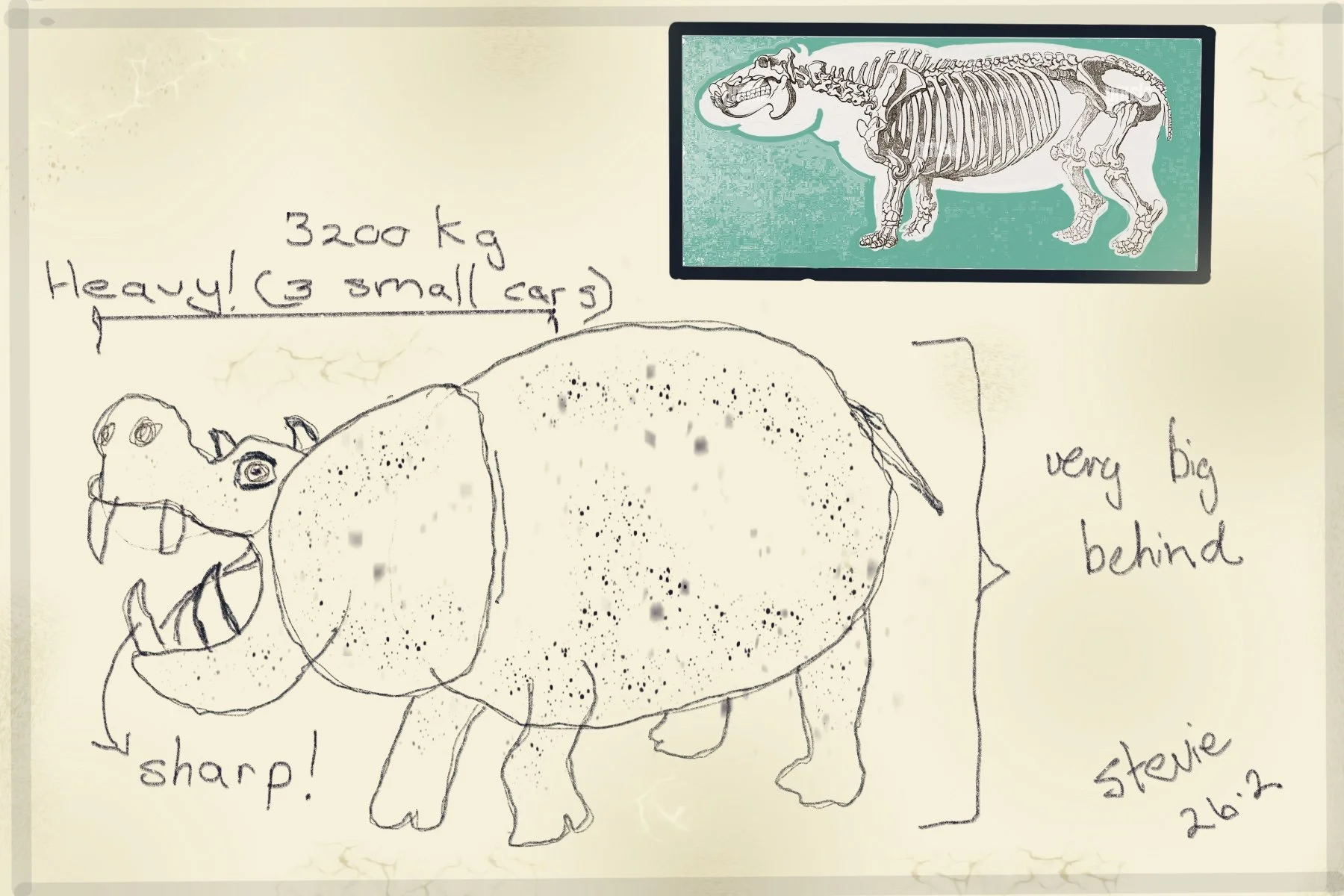
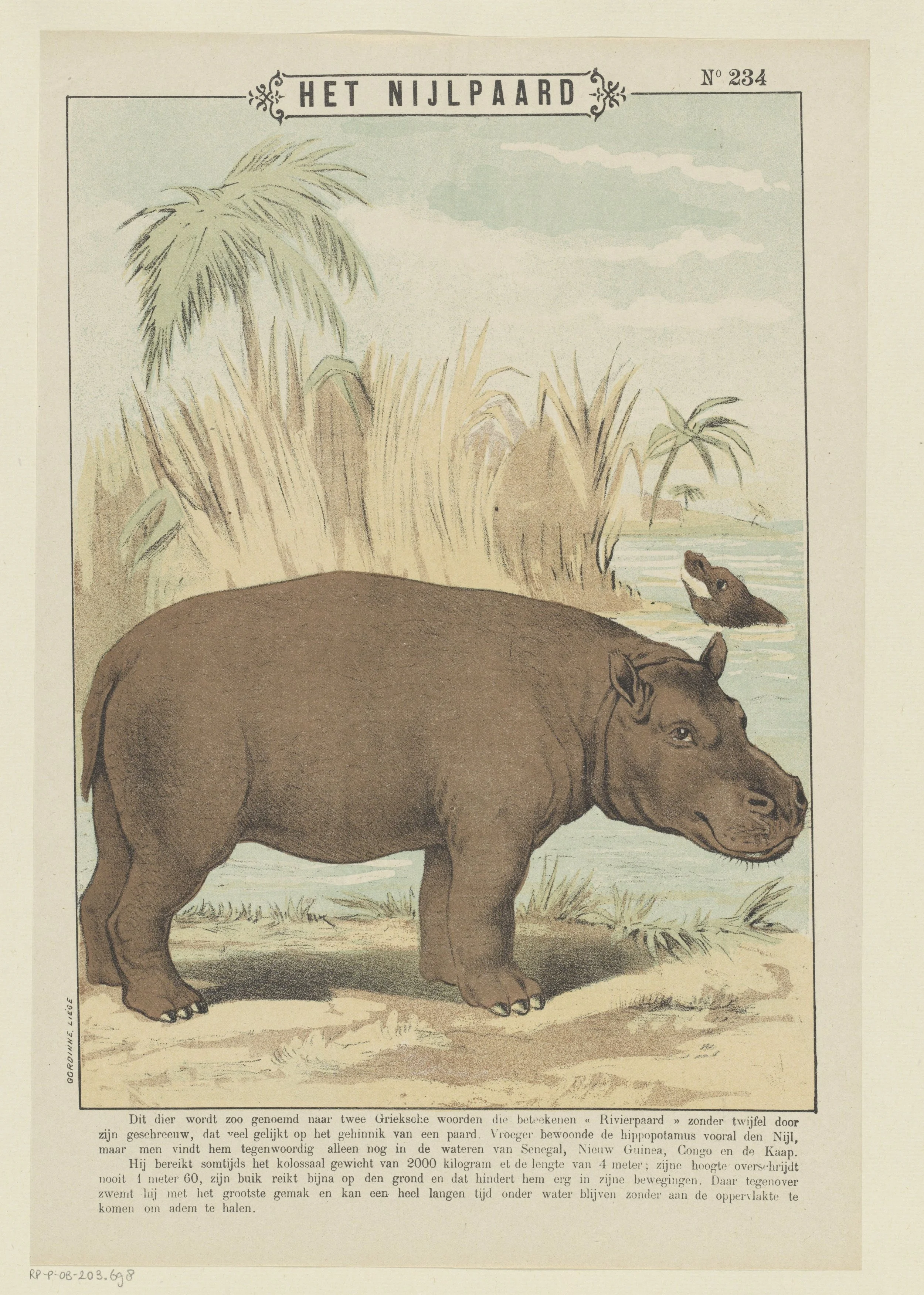
The Hippopotamus is the deadliest large land animal in the world. Every year about 500 people are killed in Africa, mostly at water sources shared with humans. Because they are extremely strong, unpredictable and aggressive, they tend to crush humans or predators close to their territory.
Sadly, in 2014, a boat was capsized in Niger by a hippo and 13 people were killed.
Because people can't outrun a hippo, they should stay clear of water where these animals spend their days. They love water because they are semi-aquatic mammals, which means they have warm blood like humans and other animals, and spend most of their time wallowing in water to stay cool.
Unfortunately, humans are one of a few predators who hunt these large beasts for ivory, and now they are an endangered species like rhinos.
'What would you do if you found a lost hippo calf, Stevie?' Gran asked me yesterday.
My first thought was that I do not live in Africa, so there's no chance of ever finding a lost baby hippo. But I could tell she was serious and not in the mood for wisecracks, so I said, 'If I'm in Africa on my next trip, I would not take a bath or shower or even wash my face in a river.'
Duh, Stevie Snickerdoodle - wrong wisecrack answer! Gran's eyes told me so too. So, I tried again, 'I would put a rope around its neck and lead it to the nearest river. Yes, that's what I would do. I would stay away from its mouth, you know, just in case its big mouth becomes hungry.'
Gran was happy with that answer, and said, 'I'm glad, Stevie, because you can always judge the heart of a man by his treatment of animals.'
Huh?! I would have to think about this heart and treatment and animal thing, but what she said made my insides feel warm and fuzzy. I don't know why..... well, not yet.
Hippopotamus
Find out where the only wild herd of hippos is outside of Africa.
Then try to work out today’s proverb:
Animal proverb: We don't respect the fat hippopotamus more than the thin wild dog
Gran's pocket wisdom: ‘He who does not know one thing knows another.’
Reflects that everyone has unique knowledge or skills

No. 04
Elephant
Elephants are always hungry
The other day in class, Mrs Gooseberry told Pete, who always sits at the back of the class, that eating is not allowed in class, but only during break. And you know Pete, he always complains with oohs and ahs and buts. Well, he should've known better to go, 'But Miss', because when our teacher tells a story, it is worth sitting up and being quiet.
I know why Pete was eating, because Mrs Gooseberry's story was all about elephants who eat 16 hours every day, and then make gazillion poop mountains. Can you believe it!
'Oh, it's not about what they produce, Stevie,' she said when I asked, 'It's about what happens to all the dung.' And when Chloe-know-it-all asked what could be good about dung, I could swear Mrs Gooseberry rolled her eyes and then explained with a question, 'What do you think happens to the dung, Chloe?' By now the boys were slumping in their seats and going, 'Not more stuff we have to work out, Miss!' Pete and his friend, Jo-Jo, even pretended to faint!
I don't know why they don't like to think about things, because Gran always tells me, 'Sit still for a moment, Stevie, and the answer will come to you,' but sometimes the answers won't come, and then I visit the library where all the answers to tough questions hide inside books.
When the bell rang for short break, I raced to the library where Miss Knowsy already had a book waiting for me. (I honestly don't know how she knew I wanted to know more about elephants!). On the front was a HUGE elephant -about a million times bigger than me - who looked me right in the eye, so I thought, Bring it on, Mr Elephant! I know how to read, and you don't.
What a book! I definitely learned something new about that lumbering fellow. I learned that elephants don't eat all kinds of toxins like we humans, but only leaves and grass, so their dung is clean as clean can be. Talk about dung is really EWW!
When Mrs Gooseberry asked Chloe what might happen to the dung, I thought: This is easy. You have dung, you have the hot African sun, and I mean HOT as Hades kind-of hot, and you have flies. There will be a whole lot of worms soon enough! But the elephant book said, even though that's true, once the worms had done their job, whatever they leave is like super good for the soil and plants.
And just before I put the book back on the shelf, Pete and Jo-Jo came to sit with me, so I showed them the picture of a boy next to the elephant. That's when they became silly again, squeaking like a little child and a big bull elephant. Well, what they thought an elephant would sound like, but the book said elephants really trumpet and don't say words!
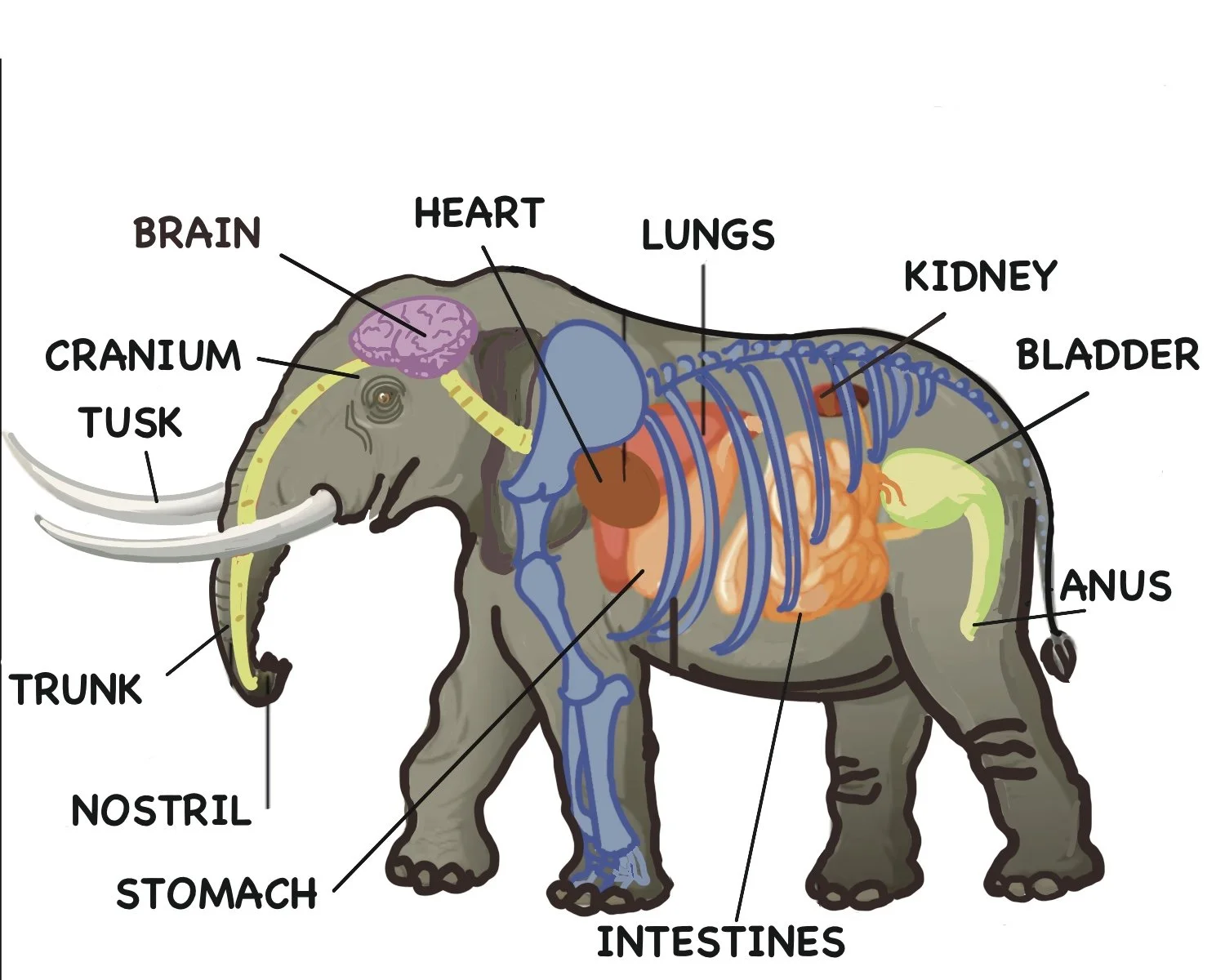
To be honest, when you look that elephant on the cover in the eye, I'm sure it says something. Maybe laughing a bit about Pete and Jo-Jo's funny voices, or maybe speaking without words like my dog, Snoop, who tells me lots of stuff without making a sound.
I told them elephants are the biggest land animals in the whole world, but the book says they are gentle, patient and wise. And the one thing they are very good at is remembering, so if I were Pete and Jo-Jo, I would be careful not to make fun of an elephant, because they will remember!
When I told Gran about what I had learned about elephants and that they remember everything, she patted my knee, sat quietly like she always does, and then said, 'Stevie, everything you've told me is true and very interesting. But what I know about elephants, and remember, I grew up where they roam freely, is that elephants might remember you forever, but if you've met an elephant, you never forget them either.'
Gosh, Gran always says things that I have to think about, and this one I'd have to think about LOTS! I mean, how can you forget what they look like, or that they're big, or that they poop huge piles of dung? I think she meant something else.
What do you think Gran meant by: 'You never forget an elephant?'
When you’ve worked that one out, try the proverb:
Animal Proverb: There is not enough room for two elephants to sit in the same shade
Gran's Pocket Wisdom: ‘The best way to eat an elephant is one bite at a time.’
Advises breaking down big tasks into manageable parts