Blending African folklore with modern storytelling
A Winter Rose
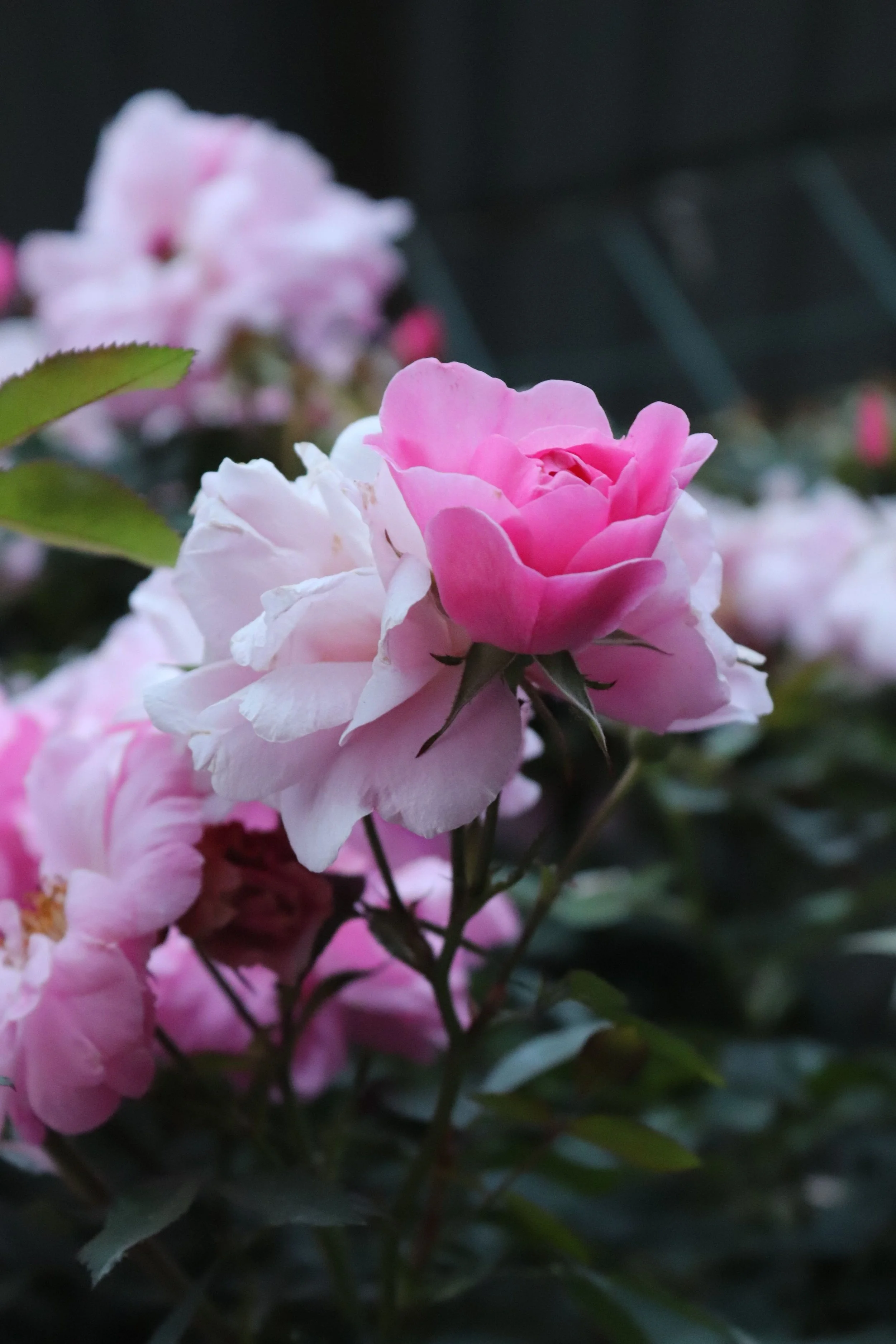
Against my home's cold wall, a pink rose blooms.
My favourite, the yellow one to its left, behaves like a winter rose, standing in silence, observing the garden, stingy in its restful stance, stingy in colour, nectar and scent.
Not the pink rose. Defiant like a warrior of old, looking down on fourteen others that I tend with equal measure. When the garden was holding its breath for the spring bloom races, I tended them all. No favouritism directed the secateurs. No. Not even when I planted them on a vision of scent wafting through open windows. My nonpartisan heart loved them like a mother even-handedly loving her children.
Winter, though, loved the garden differently. The sun fell shyly on some plants and fiercely on others. The light, too, was different. The green lawn became dry and uninviting. Forget-me-nots and daisies bowed with tired heads, sending bees to lavender whose purple blooms had already become powder when touched. Nights were cold; frost and chilly winds ripped past corners. The only sign of growth sat in green buds on hard, brown hydrangea stalks. A promise of plate-sized blooms in September.
But no rose blooms in winter.
Of all the plants in my garden, roses are my soul-filler, my mood changer, my memories of child-eyes full of wonder walking beside me - children long grown into adults. The first flower from a lover's hand; still his flower of choice many years later; still picking a rose to honour a lifetime union.
Such is the power of a rose.
The pink rose knows that.
It carries the sun of summer and the memory of bees and birds within. It remembers the hands that tended it, chose it, when more beautiful flowers competed for a vase and a place in my heart.
It harbours the joy of overcoming autumn's hot days and cold nights; fierce unseasonal storms filled its leaves. Maybe it recognised the emotions of those who touched it fleetingly and sometimes more deliberately.
Now, it stands open-faced, turned towards me, as if sensing the changing seasons within me.
None of us walks through life without our seasons changing. The roles we once played are no longer relevant. The once trusting eyes of our children now look down with love on their own offspring. A lifetime of love and sacrifice has shifted on its axis - the people who needed you then now need you differently. Like the pink rose who calls me open-faced in the off-season, different things call us to question our life seasons:
The why of passions, long forgotten.
The music suddenly calling; music on the instrument you never learned to play.
An urgency to create with your hands.
Someone else's exciting life you have not yet tried to live.
A part of yourself you had never explored.
To breathe a grandchild’s scent again.
The pink rose and I face each other with the knowledge of changing seasons. Open-faced. Turned towards the sun of life. A return to Earth's ancient wisdom.
If you find your pink rose, perhaps linger a while; touch its petals with a soft hand; breathe in the fragrance of its seasonal defiance. Stay a while.
Some of life's blooms can only sprout from plants that have grown strong over many years.
Tšhoši the Soil Keeper
Seeing the world from Nature's perspective is typical of the African peoples who inhabit its realm; a worldview I share.
From the rolling grasslands - the towering knobthorn and marula's veld home - and the beady-eyed crocodile's river nest, Earth remembers the language spoken by her inhabitants before Man came along. Here, tiny creatures are cast high above the tallest animals, trees or mountains. In this world, Tšhoši the Ant is king, and Tlou the Elephant sits at its feet. Anthills are not mere soil structures, but homes to the wise and strong.
A few years ago, my suburban home became a haven for what everyone calls 'little black ants'. I can think of a few choice names, but little black ants is more acceptable and does not honour these little pests with their fancy-sounding name: Ochetellus glaber. I can say with some certainty that most people I know share my dislike of Ochetellus glaber, or in Earth Ancient terms: Tšhoši dwellers.
At the time, I tried everything commercial, remedies suggested by those in the know, and a few of my own I refuse to own up to, just to rid my kitchen of Tšhoši dwellers. Sugar bowls rested inelegantly in water bowls, the air thick with insecticide sprays, the drains as clean as they would ever be again, and windowsills packed with baby powder or some floury concoction. Yet Tšhoši and his fellow travellers stayed like unwelcome guests. I started feeling a kinship with Werner Hertzog, who said this about uninvited guests: 'I do whatever pushes me hardest. It's coming at me, and I try to... it's like uninvited guests, and I have to wrestle them out the door or through the window - get them out and get over with them quickly.'
Yet they stayed, and stayed, and stayed. Until one day when a friend came over, listened to my tirade, and said, 'But you like nature.'
Of course I like anything to do with nature, but what could I possibly learn from Ochetellusious Iritatus? Much, I learned. They are on Earth for a purpose, and maybe their purpose is to invade my home, which we had so meticulously prepared for their enjoyment, and to teach me something.
So, I watched the little black crawlies, and this is what I found when blocking their path with a well-placed foot: Instead of crossing the barrier, they found a way around in no time. Ditto for the baby powder. Never breaking rank, they followed the leader, fetched whatever was regarded as food and returned as a unit to their nest, presumably to feed a queen and other family members. They operated as one.
Imagine if humans could work together like that, or try less to be our own master.
The ants worked together for the common good with no obvious ruler. Well, if there was a ruler, she wasn't demanding but focused on the family nest.
My foot obstacle didn't cause tšhošis to dissolve in despair; no, they found a way together, keeping their eyes on the target. Not only did they not give up, but once burdened with their load, they helped others carry, and made way for those with the heaviest load.
I went outside and watched their comings and goings, then shone a light into their nest where everyone worked together, rested together and ate moderately from shared resources. I thought I liked nature, but after watching these little black ants, I stopped laying barriers and adopted a more positive attitude to life.
There is great intimacy in viewing the world from an ant's perspective. When adopting life lessons from the tiniest creatures, Man steps back in time to learn from Nature what it intended for us to know:
Learn the little lessons to manage the big problems in life
Animals know
My heart is forever glued to the rawness of smells, the crunch of leaves and dry grass underfoot, and the touch of a baby bird's downy softness. The sight of antelope, the towering bushland trees, and the memory of magical long-gone childhood years surrounded by nature bring a tightness to my chest that can linger for days.
Such is the influence of Africa.
Now, I'm old enough to treasure the wisdom that nature imparted - what transports me and many others like me to the fields of barefoot, carefree children we once were. Somewhere in our souls that child remains, free to visit those fields whenever needed and pass on the rituals, knowledge and social wisdom from one generation to the next.
While reminiscing not long ago about things close to the ground, I was reminded again of my parents' wisdom. With no more than primary school education's book knowledge, as farmers, they learned life truths mostly from interaction with animals. It is not surprising that we children had free choice of pets, wild and domestic. Having a choice opened our hearts to these universal truths; to understand life on a level animals themselves have known since walking Earth for the first time.
If this sounds somewhat far-fetched, hear me out.
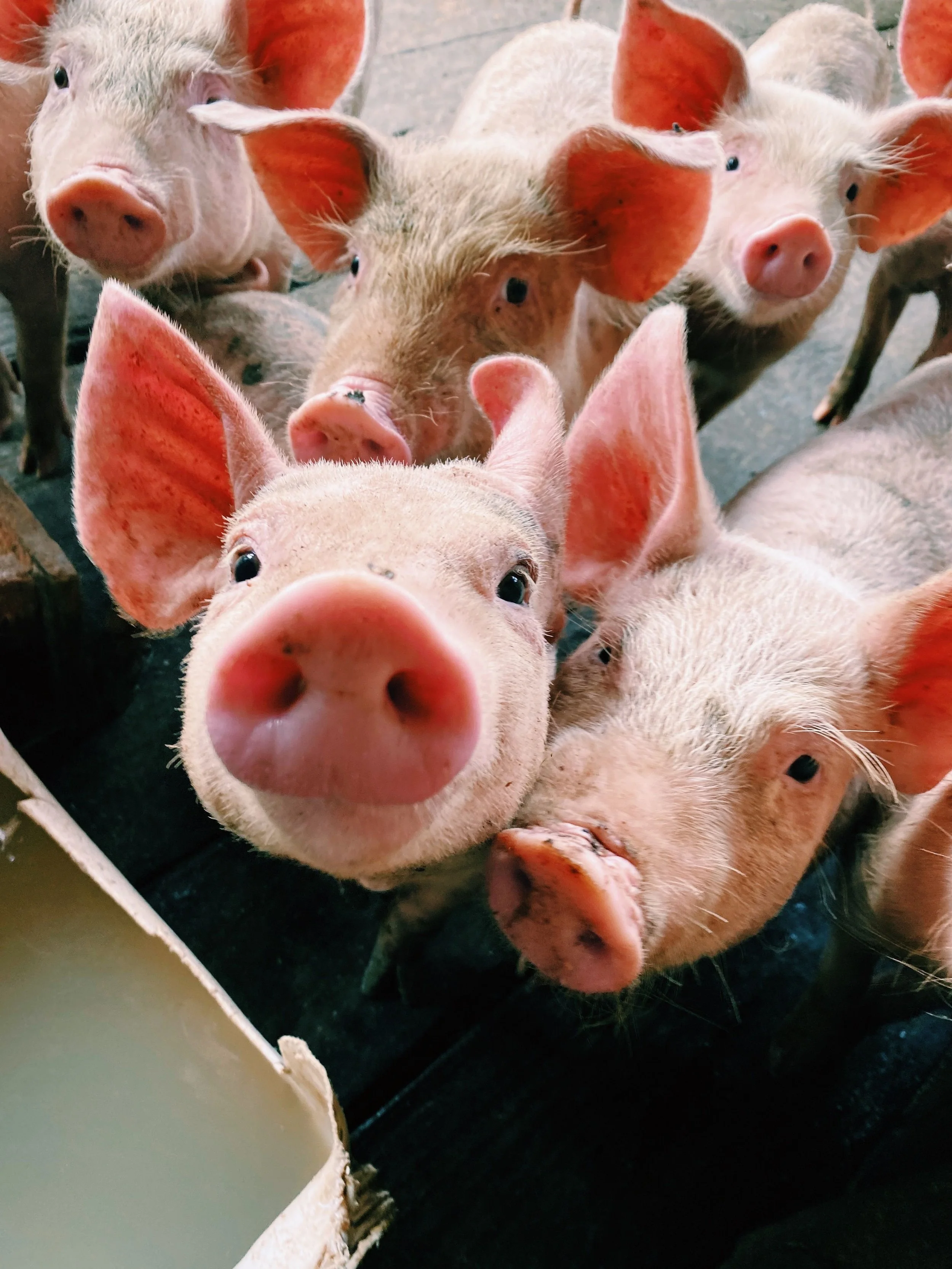
I had a piglet pet, Oitjie, as soft and white as the cotton on our fields. We were constant companions, roaming wherever pets were allowed, which excluded the yard. My mother had a mean wagging index finger, which Oitjie understood and adhered to better than me. A flick of the finger or shake of the head was all this piglet needed to avoid trouble, which is more than can be said of many humans. In her mind, Oitjie was more human than we humans.
The two of us endured endless ridicule among my less animal-oriented siblings. After all, pigs are pigs and animals don't understand human talk, right? But I knew, Oitjie knew, and my parents knew how Life was supposed to be lived. We understood Earth Ancient's intention, where power and knowledge rest with all of Nature.
Oitjie was a perfect example of how we should interpret the world and adapt our behaviour to navigate said world. A master teacher of social intelligence.
Animals know what we must still figure out
The Weebill Song
What prevents us from sitting quietly in a garden? Time, maybe. Commitments, certainly. No access to a garden, sometimes.
In African mythology, whatever prevents us from walking hand-in-hand with Nature burdens us with unhappiness. But when Quiet sits next to man, it has a story to tell. And the story has lessons, and lessons are seldom learned on the run, being busy or in busy spaces, unless they can only be learned in the busyness of days and man’s endless scurrying.
I have a dream bench that sits lazily in my garden - a haven, created for birds, bees, the occasional possum, lizard, and snake - placed with purpose under green-painted mulberry leaves, spreading its umbrella wide. This is the kind of space to reflect on universal truths; letting go of what rips calm from our chests and replacing it with serenity. In my garden of timeless soil, a shrub or tree displays its flowering beauty each month. In winter's cold, a single flower could open the path for accepting lessons more readily. In summer's fury, bees distract and encourage.
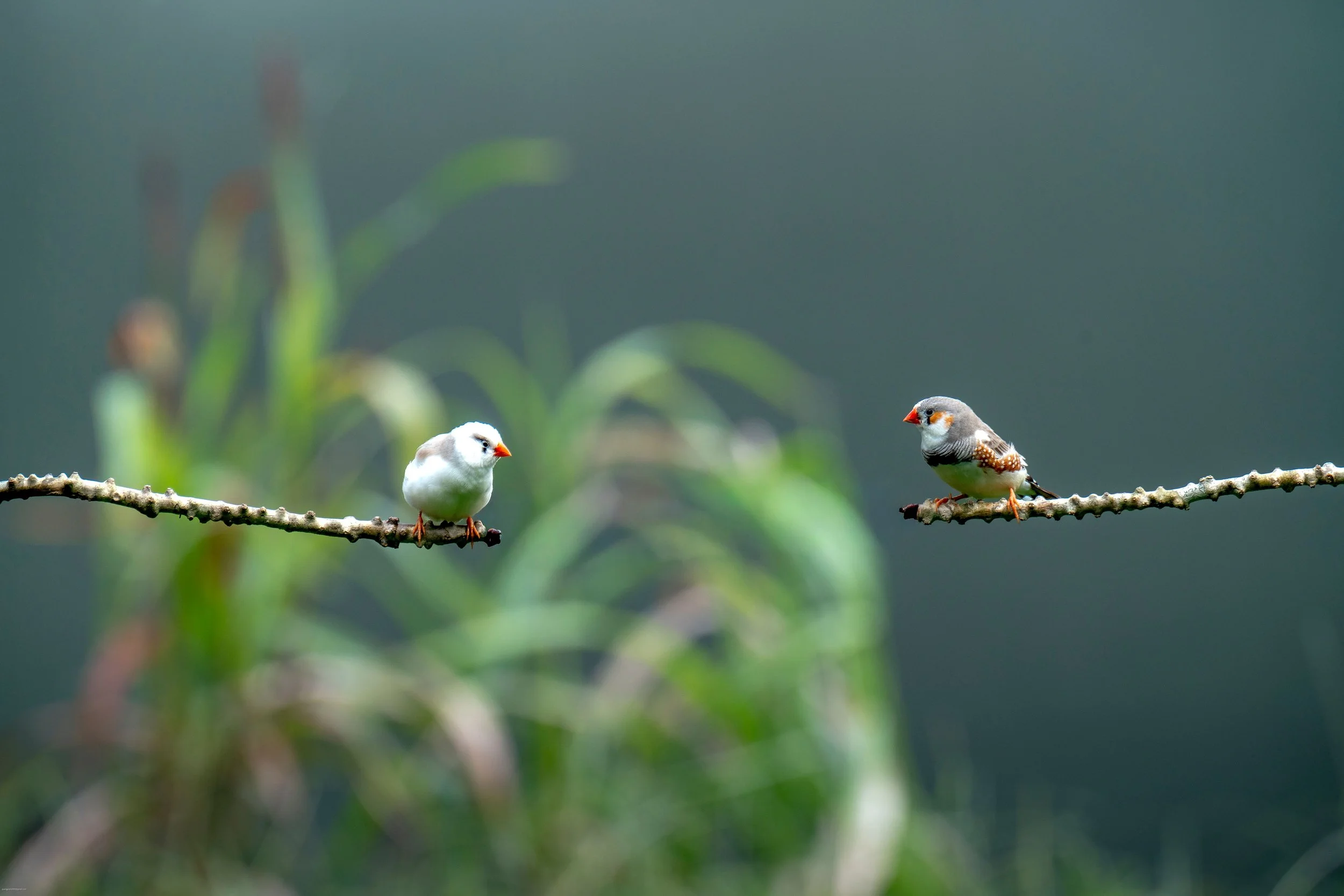
Sometimes, magic comes from hearing the tiniest Weebill birds chirp, flirt among the flowers, court their mates, and build nests. Though hard to detect, Nature has gifted Weebills a tuneless song as protection, and in return, their song gifts us calm.
When overwhelming demands burden our souls, finding time for a dusty garden bench often disappears. But in every problem Earth Ancient lays on us, she also provides a choice.
If a dusty dream bench and birdsong bring you calm, why not take it wherever you are by singing a patience-building, timeless Weebill tune? No fancy words or intricate chords - this is the inside bench and song to ponder the whys of life; its tune is universal; its rhythm brings harmony.
Man also has the choice of an outside dream bench in a garden wherever that garden is to be found, which puts Nature in charge of our peace.
The magic happens when we realise man's contentment rests in an imaginary Weebill song. Whenever life's edges are sharp, close your eyes and find that tuneless tune.
Make time
Take a deep breath
Sit on your garden bench
Listen to Nature sing
Sing your own Weebill song as you go
No fancy words or intricate chords required
Listen to the Wind
It's not the presence of the wind, a breeze or slight stirring of leaves that we notice, but the absence thereof.
Go for a walk, wait in line for a bus late in arriving, read a book on the porch, ride a bike, even in the breezeless offices we call home for many hours every day - every situation in which man might find himself speaks of the wind's presence.
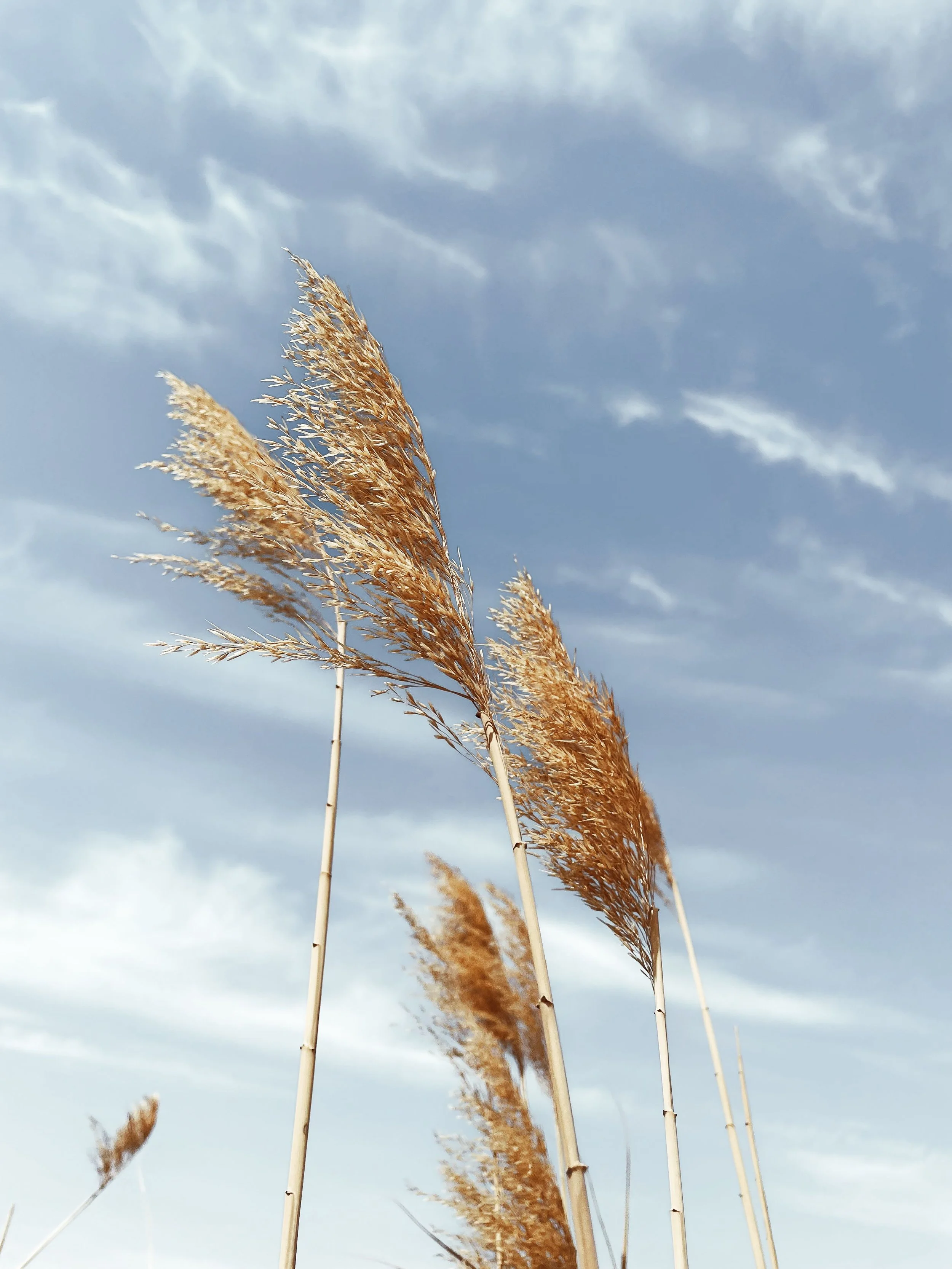
Not long ago, sitting out in my garden with winter's dusty breath on every leaf, the slightest breeze brought the scents of my childhood on a farm where long, dry winter grass provided a playground for winds fierce, friendly or calm. The kind of grass that planted worry squarely on my father's forehead.
The problem was not the grass that behaved as grass was supposed to in winter, but the kind of grass that held out welcoming arms to lightning and a breeze.
Maybe that breeze knew the kind of wind that lived in my child imagination: a person-wind with feathered wings who could fly carefree among birds, or, depending on its mood, play mischievously low among dry winter grass.
Dreams have no boundaries.
My person-wind soared with hawks and vultures, played with monkeys and baboons in the mountains and swooped down into the valleys to whip off hats or stir veldfires into action. It had a fearsome temper on bad days, soothing charm on mellow days, and days for sitting quietly and listening to its voice.
For, talking it does, like any of Earth's creatures:
*Melancholy and Sadness find solace in a warm breeze.
*Hatred and Anger run with a fierce wind.
*Love longs for spring's peace-loving winds.
*Joy revels in the pleasure of the breeze that touches cheeks in affection.
*Fear lives in the threat of an unpredictable wind.
Many nuanced feelings, born of these core emotions, can find the road to calm by listening to the wind.
Every leaf must fall. Every wind has blown before. You've seen and felt it. But not all dry winter grass must burn.
Then there are the nuanced seasons worth waiting for.
Go outside today and listen to the wind.
Find your person-wind.
Now fly
Origin of Man and Beast
My youth was spent in a place where myths, legends and reality mixed easily. It was almost impossible to separate what was real and what was imagined. I never questioned whether the imagined had its own reality. Storytellers are imagination dwellers. We walk hand-in-hand with Imagine.
As I sat in my garden on a sunny day, I noticed a sizeable hole underneath the mature mulberry close by. Whoever had dug the hole was not part of my household, so who was it, and why hadn't I noticed it before?
Stepped forward myths and legends.
The Bushman, or Khoi, is the oldest living culture in Africa. They are widespread across southern Africa and carry with them Time Ancient's stories and beliefs, which have sustained their down-to-earth lifestyle and the extraordinary joy they find in their surroundings despite the influence of modern man. Their story-dances vividly reflect the imagined.
Looking at the mulberry hole, I could imagine how the Bushmen's imagination might be piqued, and their intimate cohabitation with nature could reach into memories to explain the hole's existence.
I leaned back, closed my eyes and imagined their explanation.
At the dawn of time, an enormous tree stood in the middle of a vast field. Its branches stretched wide to cover mountain and valley, and its shade cooled the earth on hot days. Never did it lose its leaves but remained true to a tree's purpose as a barrier between Sun and Earth.
A hole as big as the sea lay dark against its base, the purpose of which was unknown. Until one morning, when the hole opened, and everything that lives in the wild came from its dark interior. Animals, birds, reptiles and sea creatures, big and small, strolled in their millions from its belly to enjoy the plentiful food waiting to be harvested. Some lay in the tree's shade; others grazed nearby. Then Man exited from the hole and lived peacefully by their side.
Everyone spoke the same language.
As the sun set on that wondrous day, the hole started closing. Man, however, was not content to leave some relatives behind and shouted and cajoled the left-behind to follow. But the hole closed with a huge bang, causing the wild animals to rush off in fright, and in that wild flight, they lost the precious gift of universal language. Since then, Man and Nature had been unable to communicate freely.
Sitting there on the dream bench in my garden, I knew the imagined Bushmen story veered into myth territory, yet to me it was as real as the hole under the mulberry tree. From experience, I know Nature still speaks the universal language, but it's Man who has lost the ability to listen.
It took a hole under a mulberry tree to remind me that listening with fine-tuned ears can return Nature's language: soothing birdsong, the pacifying rustle of leaves, wind's breath that calms, and bees' buzz that promises new life. When outside again, take time to learn Nature's language anew.
Just imagine

The Anchor to Our Lives
What do we hold onto when life's storms wash over us?
For some, the answer is easy. Others might seek a cure in their minds, as if reaching out to grasp the nothingness of an idea floating in the air.
Most often, the answer relates to faith.
Even a cursory look at religions of the world shows that most people are religious and find strength in their faith. We believe faith plays a pivotal role in our wellbeing and live according to our chosen faith's guidelines. Even those of us who don't believe in gods of any kind hold onto something that gives a focus and meaning to our lives.
While pondering the big questions of life out in my place of peace, the garden, where Earth Ancient speaks to me most clearly, I realised anew that there are no rules to what we should use to anchor our lives.
Feeling the soil between my fingers, I was reminded that the first peoples of our world could very well have walked in my garden. Their god and anchor could have been nothing other than the presence of soil, sky, mountain and sea - the structures which sustained their daily lives.
I wondered how many prayers went up to the eternal universe. How many prayers were answered by coincidence or determined by a higher being?
That, we will never know.
What I have observed in my many years on earth is that everyone needs an anchor, even those who profess to rely on their own strength. We need some handle to hold onto when the wild winds blow.
Do not say, 'I am enough,' because you're not. Even the tallest trees sway in the wind, but their deep roots keep them standing.