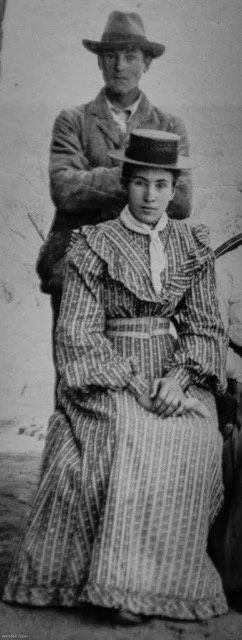
Cornelia
Part One: Scorched Earth
1 – Burning Farms
‘Since we are with Clements, we have had plenty of work burning farms. It is very hard sometimes. Last Sunday six of us went out with an Imperial officer to a fine farmhouse, giving the occupants five minutes to clear out all their goods as well as themselves. There were an old grandmother, three married daughters, and several children, crying and asking for mercy, but no, when the time was up, we burned it to the ground.’
Trooper Morris, Brabant’s Horse (Australian Volunteers)
Winter 1900, Klerksdorp, South African Republic
It was a night like any other.
The barrenness of a Highveld winter’s night lay white in the full moon’s gaze over the homestead and the vegetable garden which offered long-armed onion and spinach to its light. Sheep huddled for warmth in their pen behind the outbuildings while chicken, geese and turkey slept head-under-wing. The dam out front waited without a ripple for dawn when mist usually hangs above its cold waters – its silvery arms folding and unfolding in a quiet dance. Without a breeze disturbing the lemon tree’s branches, oupa Dewaldt’s grave underneath rested peacefully while the rise behind kept watch. All was quiet.
Yes, it was a night like any other.
But this time the silence had a life and body, a presence which I could not name. Someone was there, not in the bedroom where my sisters breathed deeply, but out there in the cold.
My stockinged feet found the cold floor to the kitchen where coals were still glowing a faint red in the hearth, waiting to be stoked and fed. As I poked around its embers, the aroma of yesterday’s baking joined that of a fire coming to life. I breathed it in deeply, kept it there, and felt the familiar odours calm the unsettled feeling that something was moving silently outside. I already knew that the ‘something’ would come, never of certainty, but a foreboding which had been my constant companion since birth. ‘Born capped, is what it is,’ older folk explained its existence, but whatever they chose as an explanation, it had woken me in the death hour to sit here, fully dressed in the warming kitchen to wait for the inevitable.
Time ticked by slowly, interrupted only by the grandfather clock’s hourly strikes - twelve, one, two, three, four, and then they came when the full moon made way for the morning star. In the bleak pre-dawn light, horse and rider moved silently, turning the bend at the old skeletal leadwood tree that had been our patient gatekeeper since the first day our people came to live here.
Ma Sophia appeared quietly to stand at the table, resting one hand on the family Bible, the other idly on the yellow stinkwood table. Even with the dangerous enemy nearby, the remember of life’s journeys and a time long gone came to sit fresh in her amethyst eyes. In those fleeting moments, she calmly walked the paths so oft revisited by my grandpa, oupa Dewaldt. I could tell she was with him like in times of old, as his mind travelled with his young self into the Knysna rainforests far to the east of the Cape Colony where the majestic yellow stinkwoods grow.
There, he braved snakes, elephant, buffalo, leopard and the ferocious caracal among the tentacles of dense forest to fell one of the giants. With four trusty oxen, he negotiated the mighty Vaal River and daunting Drakensberg mountains, moving north-north-west towards Morgenster, to this farm on the other side of the country. Here, it lay fallow for two seasons to dry. Then he started the labour of love, creating this most beautiful table for his new bride, adding a chair for each of their seven children as the little family grew.
On the day the last chair stood proudly on ball-and-claw feet, he thanked his heavenly Father on bent knee and took his last breath, right here where I was sitting – a good place to be still and feel his presence.
‘It is time, Cornelia,’ Ma said, then turned to wake the others, her long nightgown swishing around slender ankles in a nod to a German heritage. Her sleeping bonnet framed a beauty, the envy of many - high cheekbones, friendly eyes, and a wide mouth, always generously smiling.
In the warmth of down overthrows, my two older sisters, Lettie and Hannie, and six children were still fast asleep in the near bedroom, unburdened by foreboding. Along the quiet passage, four orphaned children and our three younger sisters, Johanna, Martha and Sara, shared a bed for warmth and lack of space. In the corner stood a single cot where my body’s shape lay permanently etched in the coir mattress. Furthest from the kitchen, our disabled grandma’s bedroom looked out over the back yard towards her gentle mate’s final resting place and to the mountains beyond. Five households’ joy and suffering clumped together under one roof.
If we had been asked a few years ago what extraordinary circumstances could possibly have conspired to bring us all together, the answers would’ve varied between, ‘Drought; death; misfortune; God’s will,’ but certainly not, ‘The English.’ Such was our unpreparedness for the greed of gold which saw England and its allies swarming our precious country.
Like their fellow burgher soldiers, our menfolk were defending our country from the English invaders at our door. Fatigue was pushing them beyond endurance in this second Boer War, that seemed determined to wipe the Afrikaner off history’s page. Our people’s suffering, be it God’s will or not, was worn with mute acceptance and a firm belief in pre-ordained destiny. And through His will, us women, bound by a common past, were safe on the family farm, Morgenster - named for the morning star which always appears directly over the dam out front.
During the coldest winter months, armed black bands were roaming the outlying farming areas near Klerksdorp. Commandeered and armed by the British army, they burned to the ground Boer homes and crops, killing all farm animals and moving swiftly like a pestilence sweeping the land.
‘They come when least expected,’ a visitor had warned a week prior, adding to the limited knowledge women and old people on isolated farms had of enemy soldiers’ ways. But like a fierce forest fire, knowledge travelled fast of these armed blacks roaming the countryside - a danger no local could have guessed at. After all, these were our fellow citizens - labourers, landowners, and most often servants who understood the demands of living off the land during drought and plagues.
‘Ja, the English armed these heartless devils to do their bidding,’ I overheard at the general store in Klerksdorp, and my heart became cold at the thought of local black people, angry at whites for personal reasons, being drawn into a conflict.
Noticing my interest, the informant had turned to me, ‘Now the enemy has another army who knows the veld, where people live and what they own. They can better plan to slash and burn to the ground our homes and crops, and kill, maim or steal our animals.’ But the speaker left the worst result unsaid: in the aftermath of and mostly in conjunction with these bands, the foreign soldiers gathered and systematically removed women, children, old people and loyal blacks to intern in concentration camps far from their beloved farms.
Occasionally a few managed to escape capture, but at great cost.
After receiving word that neighbouring families had been left homeless and taken away, our two older sisters, both close to confinement, fled with their young children and hid in the hills for many days during the enemy’s merciless advance. There, they endured the bitter Highveld cold with little food and drink, to slowly make their way in the dark of night here to Morgenster some thirteen miles away…………